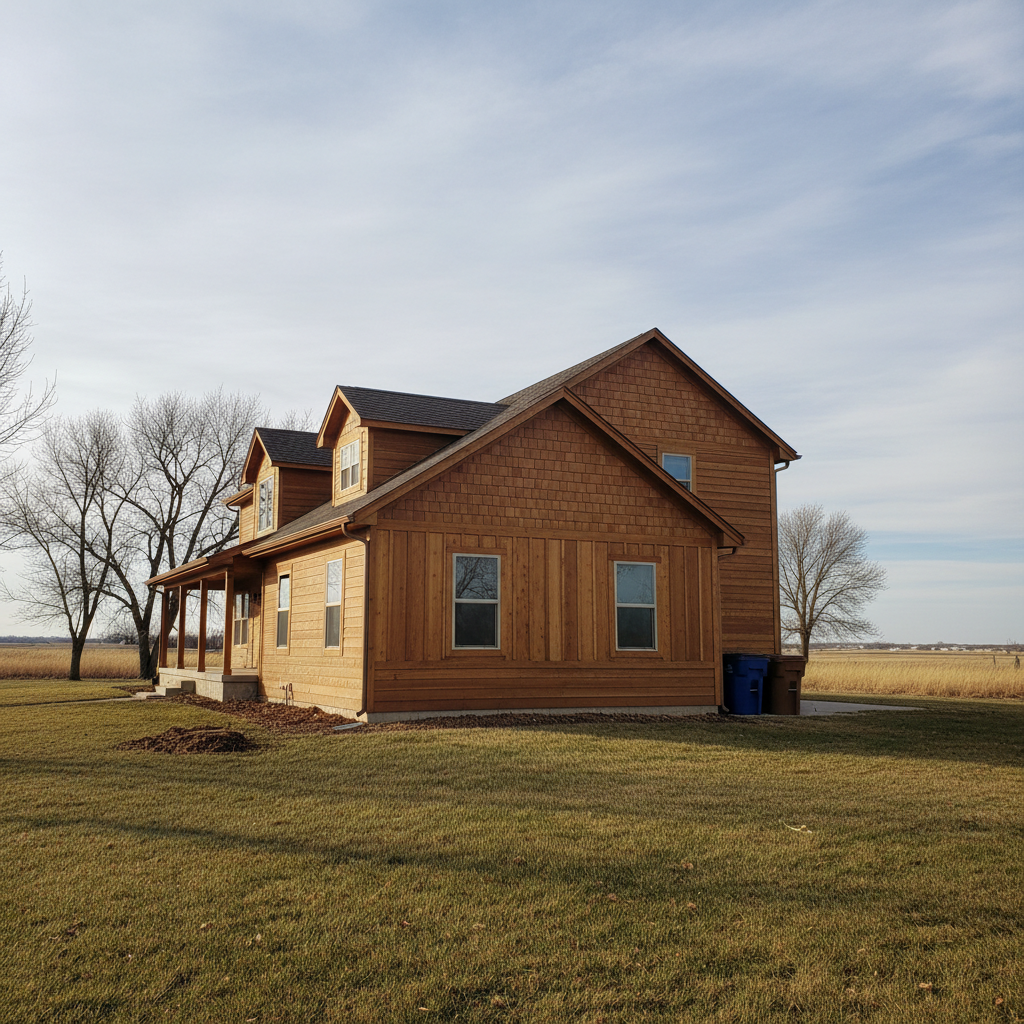
You have wooden siding on your home here in Garden City. This is a classic choice. It looks great. It adds character. It can really make a house stand out. Our Kansas weather is not always kind to wood. From those scorching summer days to the icy grip of winter, your siding takes a beating. If you want to keep that beautiful wood looking its best, and if you want to protect your investment, you need to know a few things about timing, weather, and year-round care for your wooden siding in Garden City.
When is the Best Time for Siding Work?
When it comes to installing new wooden siding or doing major repairs, timing is important. You do not want to fight Mother Nature. You want to work with her. For us here in Garden City, that usually means aiming for the sweet spots in spring or fall for your wooden siding project.
- Spring (Late April to Early June): Once the last of the winter chill is gone, and before the real summer heat kicks in, spring offers good conditions. Temperatures are usually mild. They are somewhere between 50°F and 70°F. This is good for working with wood. It allows materials to settle properly. It also helps with things like paint and stain adhesion. Spring can be wet. Garden City sees a good amount of rain in May and June. You have to watch the forecast closely. You do not want your home exposed to a downpour while the old siding is off.
- Fall (September to October): This is often my personal favorite for wooden siding projects in Garden City. The temperatures are usually moderate. This is much like spring. We tend to get less rain and humidity than in the summer. This stable climate is good for precise installation. It also helps prevent issues like warping or cracking that extreme temperatures can cause. In addition, contractors might have more flexible schedules after the summer rush.
You can technically do siding work year-round. However, you will run into more challenges in the extreme weather. You should avoid those super hot July and August days. Temperatures can hit triple digits. This can happen for days on end. That kind of heat can make wood expand too much. It can also make installation tricky for your wooden siding. Winter is not a good time for major wood siding work. Freezing temperatures make wood brittle. They also cause issues with adhesives as well as caulking.
Weather Conditions That Affect the Job
Beyond just the season, specific weather conditions play a big role in how well a wooden siding job goes. These conditions also affect how long it lasts.
- Temperature: Moderate temperatures are best. Wood expands and contracts with temperature changes. Installing it in extreme heat or cold means it will not be properly fitted when the temperature normalizes. This can lead to gaps or buckling down the line for your wooden siding in Garden City.
- Humidity: Garden City can get muggy. This is especially true in July and August. High humidity can cause wood to absorb moisture. This can make it swell. It can also make it harder for paints and stains to dry properly. Low humidity is good when working with wood.
- Precipitation: You do not want rain or snow during installation. This is especially true when your home's sheathing is exposed. Water getting behind the siding is a recipe for rot as well as mold. Even after installation, you need dry days for finishes to cure right.
- Wind: We know all about wind here in Garden City. It is windy year-round. A gentle breeze can help with drying. Strong winds can make installation dangerous. Strong winds can also kick up dust and debris onto fresh finishes. Average wind speeds here can be around 12-17 mph. Gusts can be much higher.
Protecting Your Wooden Siding Year-Round
Once your wooden siding is installed or repaired, the work is not over. It needs ongoing care to stand up to our local climate. Think of it as an investment. You need to protect this investment in your Garden City home.
Here is what you need to do:
- Regular Inspections: Walk around your house twice a year. Do this in spring and fall. Look for any cracks. Also look for peeling paint, loose boards, or signs of rot, mold, or mildew. Catching small problems early saves you big headaches as well as money later.
- Keep it Clean: Dirt, dust, and even algae can build up. Clean your siding at least once a year. A soft-bristle brush, warm soapy water, and a garden hose usually do the trick. For mildew, a diluted bleach solution (1 part bleach to 4 parts water) works. You must rinse thoroughly. Do not blast it with a high-pressure washer. You can damage the wood. You can also force water behind the panels.
- Maintain Paint or Stain: This is your wood's main defense. Paint or stain protects against UV rays, moisture, and pests. Depending on the product and exposure, you will likely need to repaint or re-stain every 3 to 5 years. If water is not beading on the surface, it is probably time to reapply.
- Check Caulking: The caulk around windows, doors, and where different siding sections meet is important. It seals out moisture. Inspect it regularly. Reapply where it is cracked or missing.
- Landscaping Matters: Keep shrubs and trees trimmed back from your house. This improves air circulation. It also helps the siding dry out after rain. This also prevents moisture from getting trapped against the wood. Trapped moisture can lead to mold and rot.
- Gutters and Downspouts: Make sure they are clean and functioning properly. Clogged gutters can cause water to overflow. This water can run down your siding. This can lead to serious damage.
Taking care of your wooden siding is not a one-and-done job. This is especially true with our Kansas weather. With the right timing for installation, as well as consistent year-round maintenance, you will extend its life. You will also keep your home looking sharp. If you ever have questions or need a hand with your wooden siding, give us a shout at Ace Siding Inc. We are always here to help our Garden City neighbors with their wooden siding needs.